Mauritius doesn’t have a single culture. Its identity was built over the centuries by peoples who came from Africa, Madagascar, Europe, India and China. Religions, languages, cuisines, music and traditions met here to form a deeply Mauritian identity.
🇲🇺 Mauritius in a few dates
A small island, a great history
🌊 Before the 17th century
An uninhabited island
Known to Arab and later European navigators, Mauritius long remained without a permanent population, but its position at the heart of the Indian Ocean made it a strategic staging post.
🇳🇱 1638 – 1710
The Dutch period
The Dutch name the island “Mauritius” in honour of Prince Maurice of Nassau and introduce sugar cane, before abandoning the colony in 1710.
🇫🇷 1715 – 1810
The Isle de France
Under French administration, Port Louis develops. This period is also deeply marked by slavery: men, women and children are brought from Africa and Madagascar.
🇬🇧 1810
Mauritius becomes British
The British retain many French customs, which explains why the influences of the two nations remain closely intertwined today.
⛓️ 1835
Abolition of slavery
One of the great turning points in the island’s history, whose memory remains linked to Le Morne Brabant, a symbol of resistance and freedom.
🧳 From 1834-1835
The arrival of indentured labourers
Contract workers, mainly from the Indian subcontinent, land at the Aapravasi Ghat to replace slave labour on the plantations.
🇲🇺 12 March 1968
Independence
After more than 150 years under British administration, Mauritius officially becomes independent.
🇲🇺 12 March 1992
The Republic of Mauritius
Twenty-four years after Independence, Mauritius becomes a Republic.
🌍 One island, several heritages
The true face of Mauritius — the carousel plays automatically
🌍
Africa & Madagascar
The roots of Mauritian Creole culture. Music, rhythm, dance and cuisine bear witness to this heritage — traditional séga is its strongest symbol.
🇮🇳
India
The arrival of indentured labourers in the 19th century transformed Mauritius. Hinduism, cuisine and family traditions are an integral part of Mauritian identity.
🇨🇳
China
A major role in the island’s trading history, visible in Chinatown and on the plate: stir-fried mines noodles, dumplings and noodles are part of everyday Mauritian life.
🇫🇷
France
More than three centuries after the French period, its influence remains everywhere: language, cuisine, architecture and Creole vocabulary.
🇬🇧
United Kingdom
From 1810 to 1968, the British left behind institutions and the use of English. And of course: in Mauritius, people still drive on the left!
← automatic scroll →
A recipe can have Indian origins and have been transformed by a Creole family. A Mauritian might speak Creole at home, French at work and English in administration. It’s this constant blend that makes Mauritius so distinctive.
🦤 The symbols of Mauritius
You’re bound to come across them during your stay
🦤
The Dodo
Mauritius’s vanished emblem. This flightless bird, extinct since the 17th century, has become one of the island’s most famous symbols.
🥁
The Ravanne
A large traditional circular drum, it gives the séga its instantly recognisable rhythm.
💃
The Séga
Music, song and dance all at once, it has told the story of life, hardship and joy for generations. Recognised as part of UNESCO’s intangible heritage.
🌱
Sugar Cane
For centuries, it has shaped the landscape, the economy and Mauritian society. Its fields still cover a large part of the island.
🥃
Rum
From the cane to the glass: some distilleries let you discover this facet of the island’s agricultural heritage.
🌺
The Flamboyant Tree
As the southern summer arrives, its red and orange flowers line some roads, often heralding the festive season.
⛵
The Pirogue
Before the tourist catamarans, it was part of fishermen’s everyday life. You can still spot them in coastal villages.
← automatic scroll →
🗣️ Speak a little Mauritian Creole!
A few words are all it takes to raise a smile
Bonzur 👋
Hello
Ki manier? 🙂
How are you?
Mo bien, mersi.
I’m fine, thank you.
Mersi boukou 🙏
Thank you very much.
Silvouple
Please.
Korek! 👍
OK / Sounds good.
Pa problem
No problem.
Nou ale! 🚶
Let’s go!
💡 The Moris Guide tip:
give it a try! A simple “Bonzur” or “Mersi boukou” often immediately sparks a warmer exchange. And don’t be surprised if the conversation carries on in French.
🎶 Mauritian culture is lived
Not just in museums — in the streets, the markets, around a table
💃 The séga — Mauritius’s musical soul
To the sound of the ravanne and the triangle, the séga originally allowed enslaved people to express their suffering and their joys. To discover its most traditional form, look out for the séga tipik.
🍛 The cuisine — A story on a plate
Indian, Creole, African, European and Chinese influences come together in curry, rougaille, vindaye, biryani, stir-fried mines noodles, dholl puri and chilli cakes.
🛕 Religious festivals
Maha Shivaratree sees thousands of pilgrims walk to Grand Bassin. Divali lights up homes. Cavadee gives rise to striking processions.
🧺 The markets
Port Louis, Flacq, Quatre Bornes, Mahébourg or Goodlands reveal a far more everyday side of Mauritius: tropical fruit, spices, street food and conversations in Creole.
🎣 Traditional fishing
In several coastal villages, fishing remains part of daily life.
🧵 Crafts & know-how
Basketry, model boats, textiles and jewellery are among the island’s traditional crafts.
🛕 Religions & places of worship
Different beliefs at the heart of a single island
🕉️ Hinduism
Temples, mandirs, kovils, Grand Bassin and major celebrations mark the lives of many Mauritian families.
✝️ Christianity
Historic churches and chapels dot the whole island, from Cap Malheureux to Port Louis.
☪️ Islam
Old and modern mosques bear witness to the long-standing presence of the Mauritian Muslim community.
🏮 Buddhism & Chinese traditions
Pagodas and Chinese temples are notably visible in Port Louis and bear witness to Sino-Mauritian history.
🕉️ Who is this god?
The Hindu deities most present in the temples of Mauritius
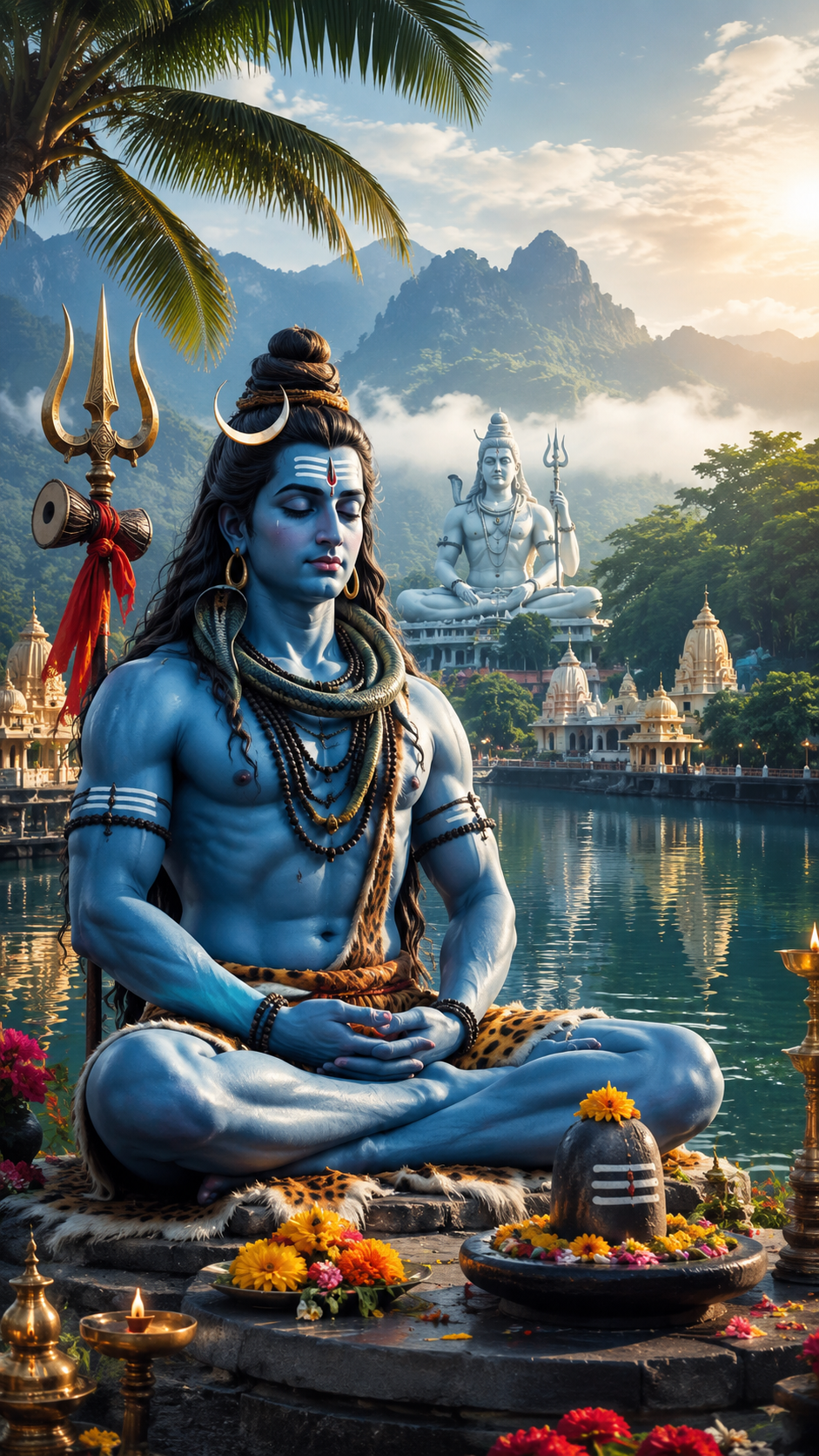
Shiva
Shiva is one of the three pillars of the Hindu trinity, both creator and destroyer. At Grand Bassin, he watches over the lake as Mangal Mahadev, a 33-metre statue. Every year, hundreds of thousands of pilgrims gather here for Maha Shivaratree, his great sacred night.
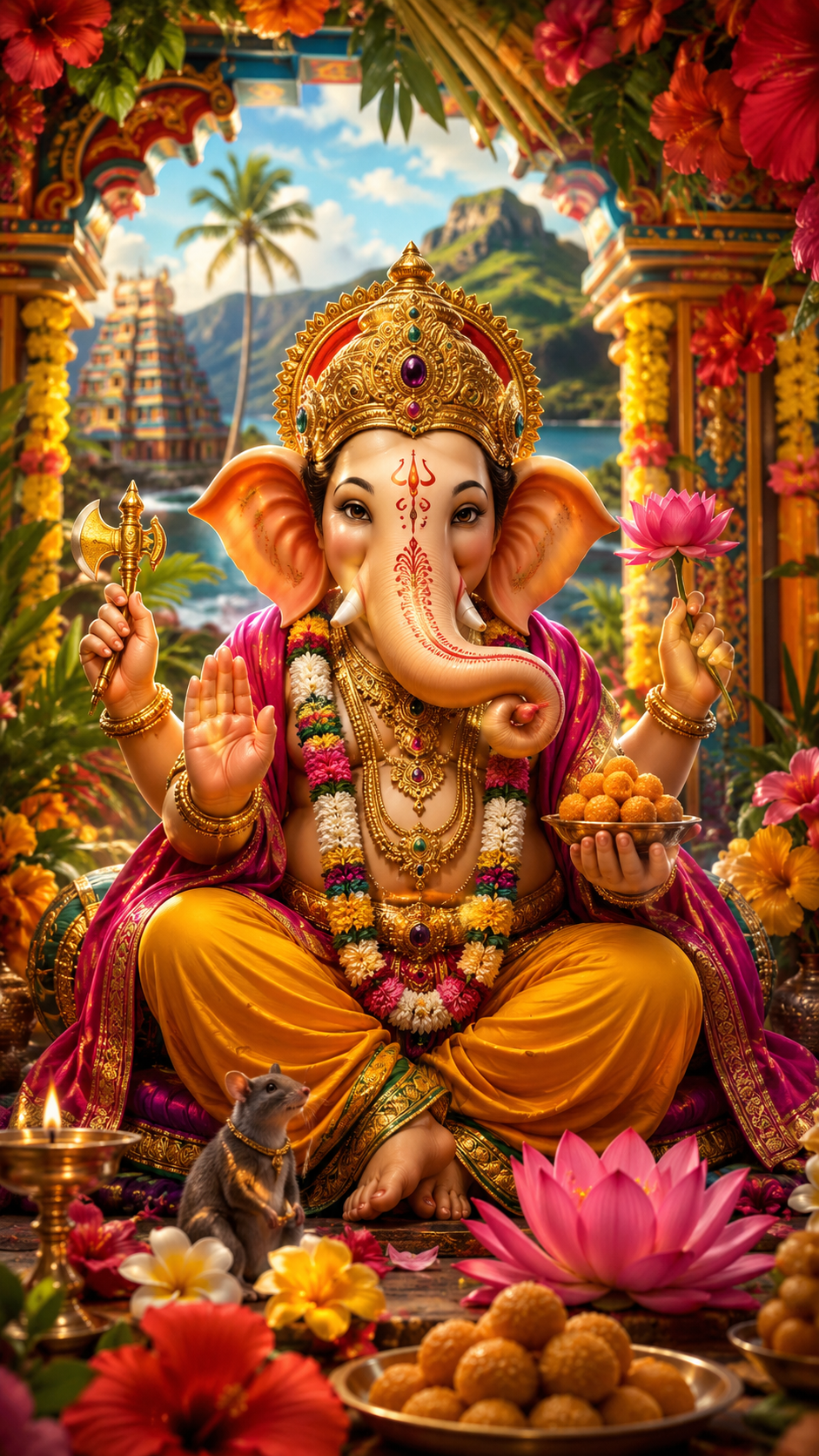
Ganesh
Ganesh is one of the most beloved gods in Hinduism. Recognisable by his elephant head, he is the god of wisdom, intelligence and new beginnings. In Mauritius, he is often prayed to before starting a project, a journey or an important ceremony.
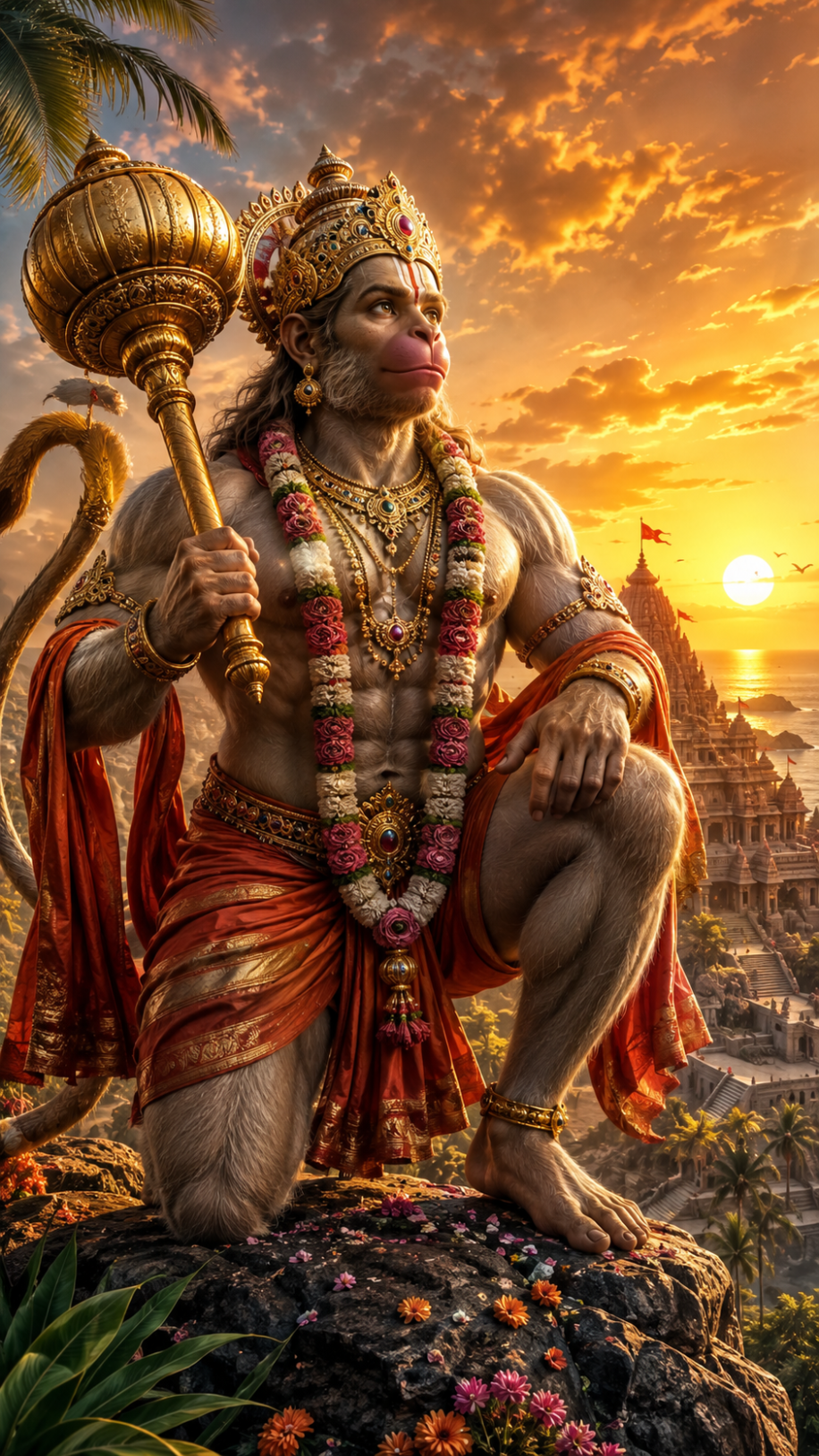
Hanuman
Hanuman, the monkey god, symbolises strength, courage and loyalty. Deeply respected across the Hindu world, he is known for his absolute devotion to the god Rama. In Mauritius, many devotees come to him seeking protection, energy and perseverance.
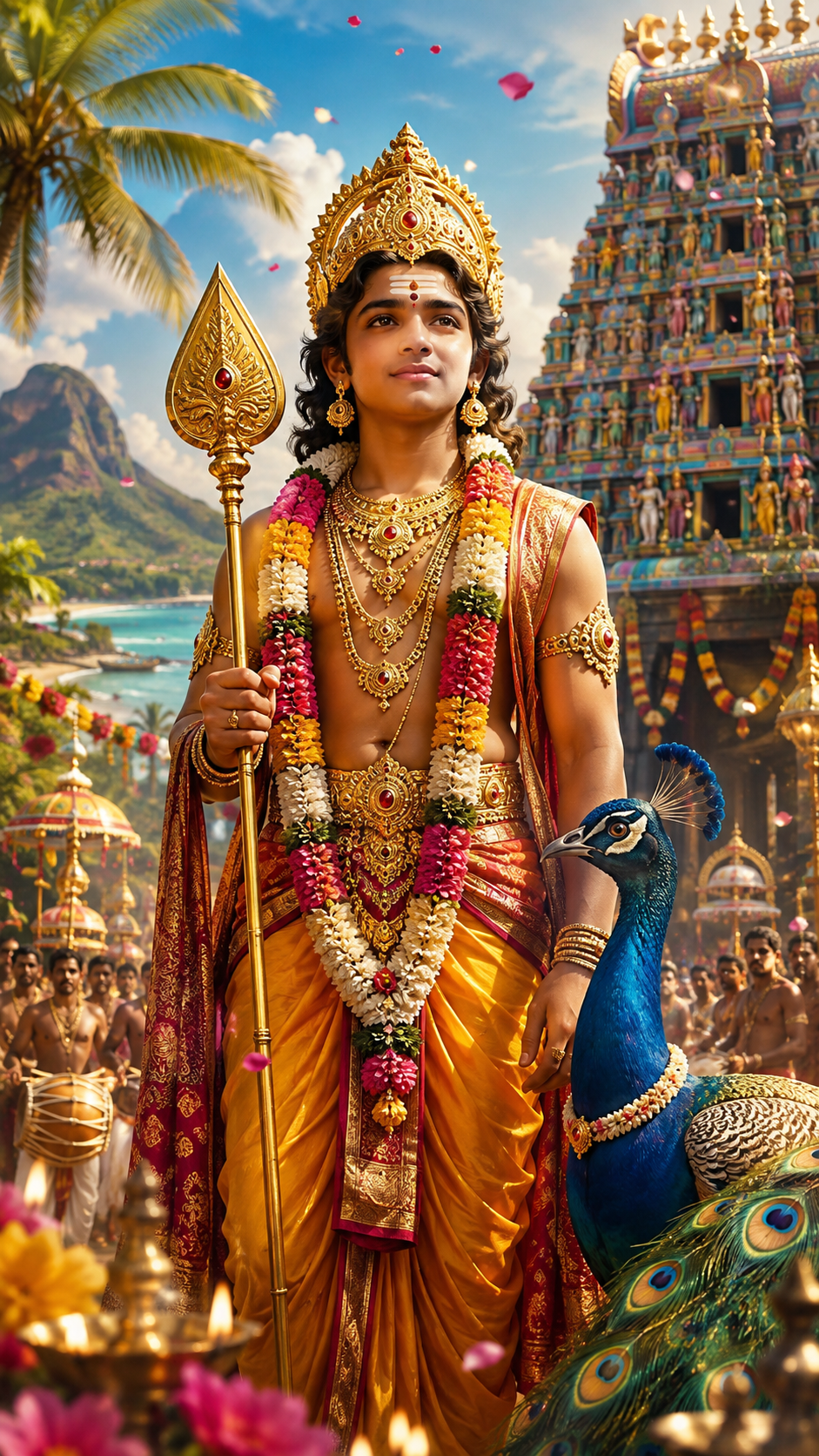
Murugan
Son of Shiva, Murugan is the god of war and victory, armed with his sacred lance, the Vel. In Mauritius, it is above all during Thaipoosam Cavadee, upheld by the Tamil community, that he is honoured through spectacular processions.
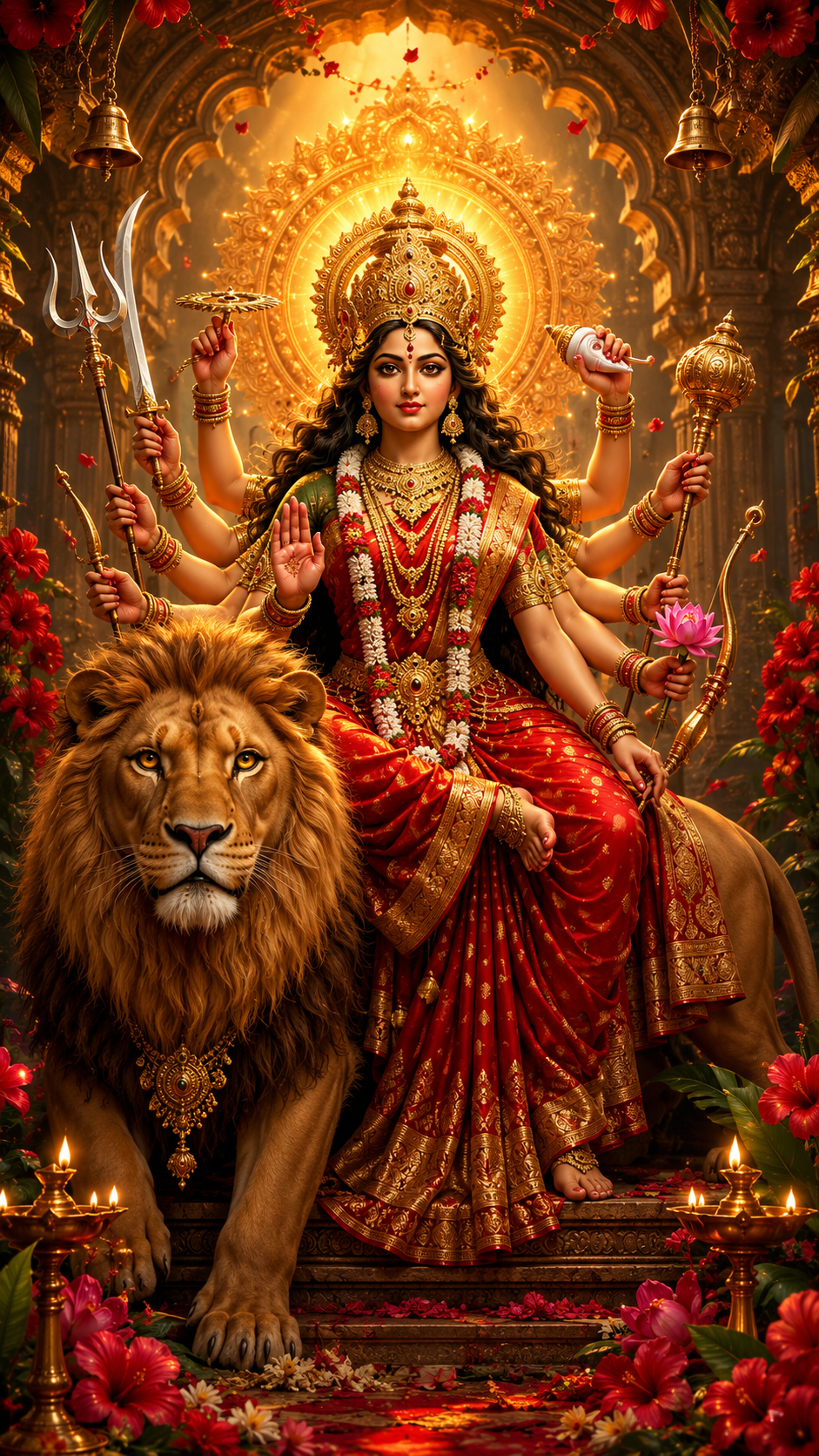
Durga
A warrior riding a lion, Durga embodies the feminine strength able to defeat evil where the male gods fail. At Grand Bassin, a 33-metre statue, as imposing as that of Shiva, now watches over the sacred lake.
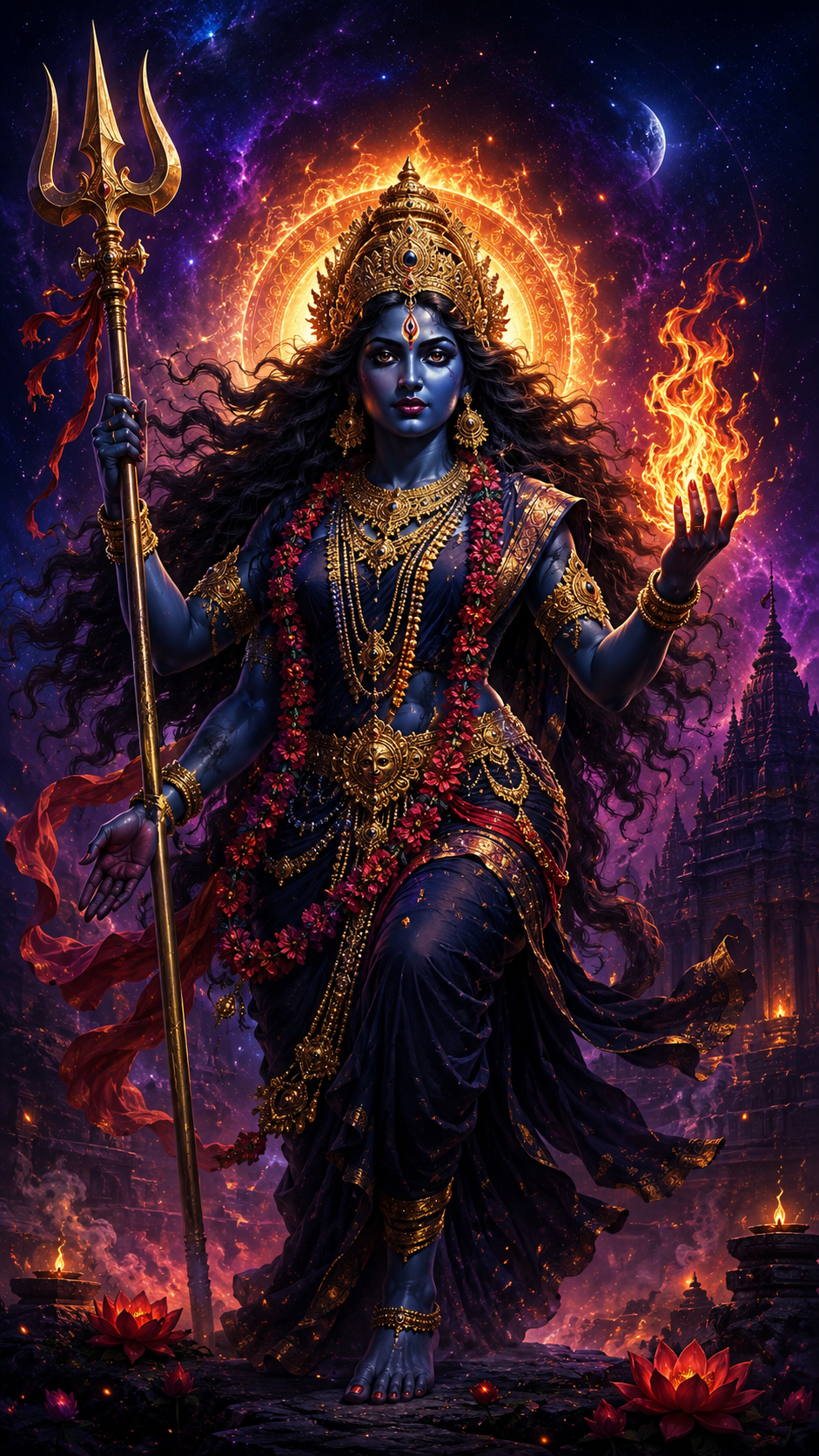
Kali
The most intense form of the mother goddess, Kali is depicted as black-skinned, tongue out, dancing on the chaos she has just destroyed. Far from being merely frightening, she symbolises the necessary destruction of the ego; several temples across the island are dedicated to her.
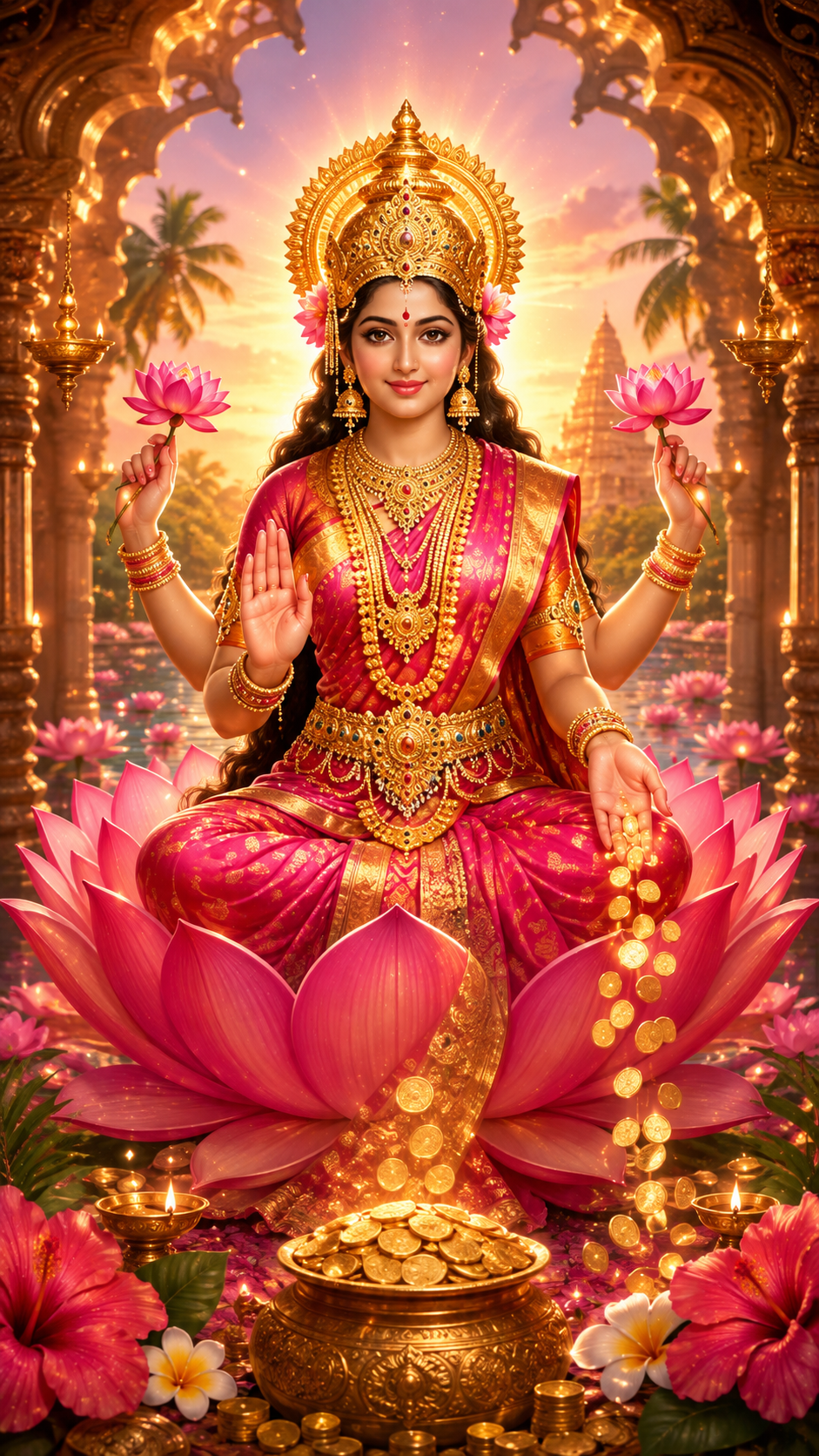
Lakshmi
Goddess of prosperity and good fortune, Lakshmi is traditionally depicted seated on a lotus. She is the one most intensely celebrated during Diwali, the festival of lights, when Mauritian homes light up to welcome her.
← automatic scroll →
💡 Did you know?
A few stories to tell when you get back from Mauritius
🦤
The dodo was naturally found only in Mauritius before it went extinct. It has become one of the country’s most recognisable symbols.
🏔️
Le Morne served as a refuge for runaway slaves, known as maroons. Its cultural landscape is inscribed on the UNESCO World Heritage list.
🧳
The Aapravasi Ghat bears witness to the arrival of indentured labourers in the 19th century.
🇫🇷🇬🇧
Mauritius was administered by the United Kingdom for more than 150 years. Yet French remains ever-present in everyday life.
🗣️
A conversation can start in French and end in Creole — switching naturally from one language to another is part of everyday life.
🛕
In some regions, just a few kilometres is enough to pass a church, a mandir, a kovil, a mosque and a Chinese pagoda.
🍛
Is there really ONE Mauritian dish? Not really — local cuisine was born from the island’s constant blending of cultures.
🌍
Two Mauritian sites are UNESCO World Heritage listed: Le Morne Cultural Landscape and the Aapravasi Ghat.
← automatic scroll →
📍 Discover the history on site
History takes on a different dimension where it actually happened
← automatic scroll →
🎉 Live the traditions
Your stay might coincide with a major Mauritian festival
🌈 Holi
🕉️ Maha Shivaratree
🪔 Divali
🌺 Cavadee
🐘 Ganesh Chaturthi
🧧 Chinese New Year
☪️ Eid-ul-Fitr
✝️ Christmas & Easter
Understanding Mauritius means understanding why a temple can stand next to a church, why Creole borrows from French, why a single dish can blend several continents. Take the time to look around you — behind every village, every dish, every place of worship lies a piece of Mauritius’s history.
Moris Guide — Explore. Discover. Live Mauritius.